


Joseph Kabila Blasts Successor's Government as “Dictatorship” Amid Treason Charges and Rising Tensions in DR Congo

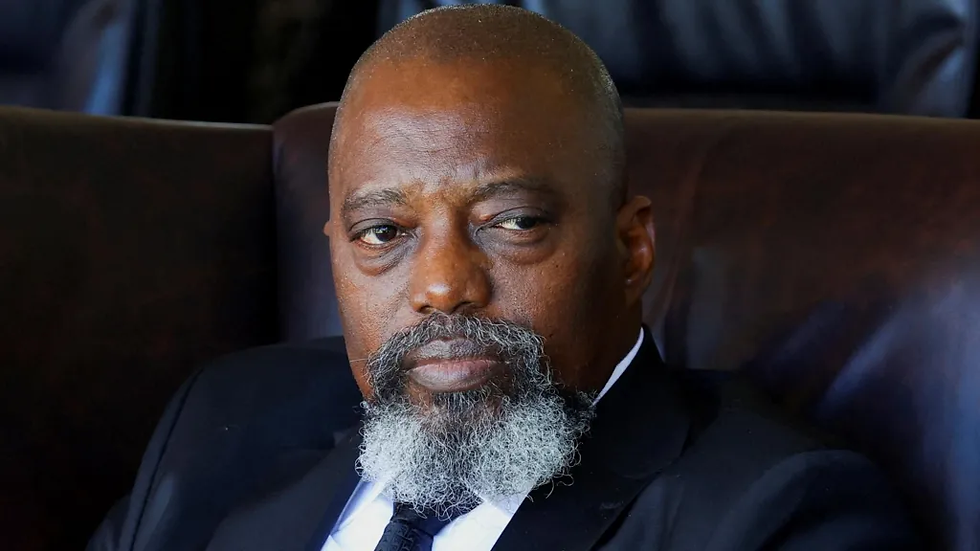
ormer President of the Democratic Republic of Congo, Joseph Kabila, has broken his silence to condemn the government of President Félix Tshisekedi, accusing it of authoritarianism, economic failure, and deepening national instability. In a 45-minute live address broadcast on Friday evening, Kabila denounced what he called a “spectacular decline of democracy” in the country and unveiled a 12-point plan aimed at restoring peace in the conflict-ridden east.
Kabila’s speech came just one day after the Congolese Senate lifted his immunity, paving the way for possible prosecution on charges of treason and war crimes. Authorities allege that Kabila, who ruled from 2001 to 2019, has links to the Rwandan-backed M23 rebel group, which currently controls multiple towns in eastern DR Congo. Kabila, speaking from an undisclosed location, said he felt compelled to speak out because the unity of the nation was at stake.
The government has yet to respond to the former president’s remarks. Any legal action against Kabila could escalate political tensions and destabilize a nation already grappling with renewed violence by M23 rebels. Analysts warn that a trial could intensify the fragile security situation.
In his address, Kabila stood before a lectern in a navy suit, with a Congolese flag pin on his lapel, and framed his statement as an “address to the nation,” opening and closing with the national anthem. He slammed the government’s decision to ban his political party, the People’s Party for Reconstruction and Democracy (PPRD), and seize his assets following reports of a possible visit to Goma, the eastern city now under M23 control.
Kabila confirmed his intention to travel to Goma in the coming days, noting he is not at risk of arrest there, as the city has been held by M23 rebels since January. He described the asset seizure and party ban as retaliation rooted in false rumors, calling them examples of “arbitrary decisions” and signs of a collapsing democratic framework.
Kabila also attacked President Tshisekedi's alleged attempts to undermine the constitution and criticized Parliament for failing to provide checks and balances. He accused the justice system of being “openly exploited for political ends” and said the country's public debt had ballooned to over $10 billion, with rampant corruption and economic mismanagement deepening national hardship.
On security, the former general decried the government’s reliance on militias and foreign forces, accusing it of weakening the national army. “The national army has been replaced by mercenary bands, armed groups, tribal militias, and foreign armed forces that have plunged the country into indescribable chaos,” he said. He specifically mentioned the Democratic Forces for the Liberation of Rwanda (FDLR), a Hutu militia implicated in the 1994 Rwandan genocide, which remains active in eastern Congo.
Kabila urged the immediate withdrawal of all foreign troops, while applauding the Southern African Development Community’s (SADC) recent decision to withdraw troops deployed to support the Congolese army. He emphasized that Congo’s sovereignty must be restored and warned that the nation, under current leadership, is returning to a “failed, divided, disintegrated state… ranked among the most corrupt and heavily indebted poor countries.”
While his critique resonated with some, critics were quick to point out the irony of his accusations, noting that many of the issues he condemned were present during his own administration.
Kabila closed his speech with a call for dialogue and peace, expressing support for ongoing discussions with the M23 rebels and backing broader national reconciliation initiatives spearheaded by the Catholic Church. He acknowledged the recent preliminary peace agreement between DR Congo and Rwanda, signed in Washington, and expressed hope it would lead to a permanent resolution to the long-running conflict.


Comments